
Playoff picture at a glance on September 7
Gotham FC leads the 2026 NWSL table with 45 points, but this is a snapshot rather than a prediction. Results through September 6 leave the top seven separated by eight points and Seattle Reign holding eighth place only two points above Angel City. Unequal games played make the race tighter than a simple rank column suggests.
The standings below are provisional. They combine the current point total, games played and goal difference so readers can see both the qualification line and the first official tiebreak measure. Refresh the live NWSL standings after every final rather than carrying this September 7 order forward.
Provisional top eight
| Seed | Club | GP | Pts | GD |
|---|---|---|---|---|
| 1 | Gotham FC | 23 | 45 | +10 |
| 2 | Washington Spirit | 23 | 43 | +13 |
| 3 | North Carolina Courage | 23 | 39 | +13 |
| 4 | Utah Royals | 23 | 39 | +10 |
| 5 | San Diego Wave FC | 23 | 39 | +6 |
| 6 | Portland Thorns FC | 23 | 38 | +5 |
| 7 | Kansas City Current | 23 | 37 | +5 |
| 8 | Seattle Reign FC | 22 | 34 | +1 |
All eight places can still move. Even Gotham has not been labeled clinched here, because teams below the line retain enough theoretical points to require more than a quick one-team calculation. The table answers “where does the race stand now?” rather than “where will everyone finish?”
Chase pack and games in hand
9. Angel City
32 points, 22 played
10. Denver
30 points, 22 played
11. Orlando
29 points, 23 played
12. Houston
26 points, 23 played
A game in hand is an opportunity, not three points already earned. Seattle, Angel City and Denver each have eight matches left, while Orlando and Houston have seven. Use the schedule this week to see when those opportunities become final results.
How the 2026 playoffs work
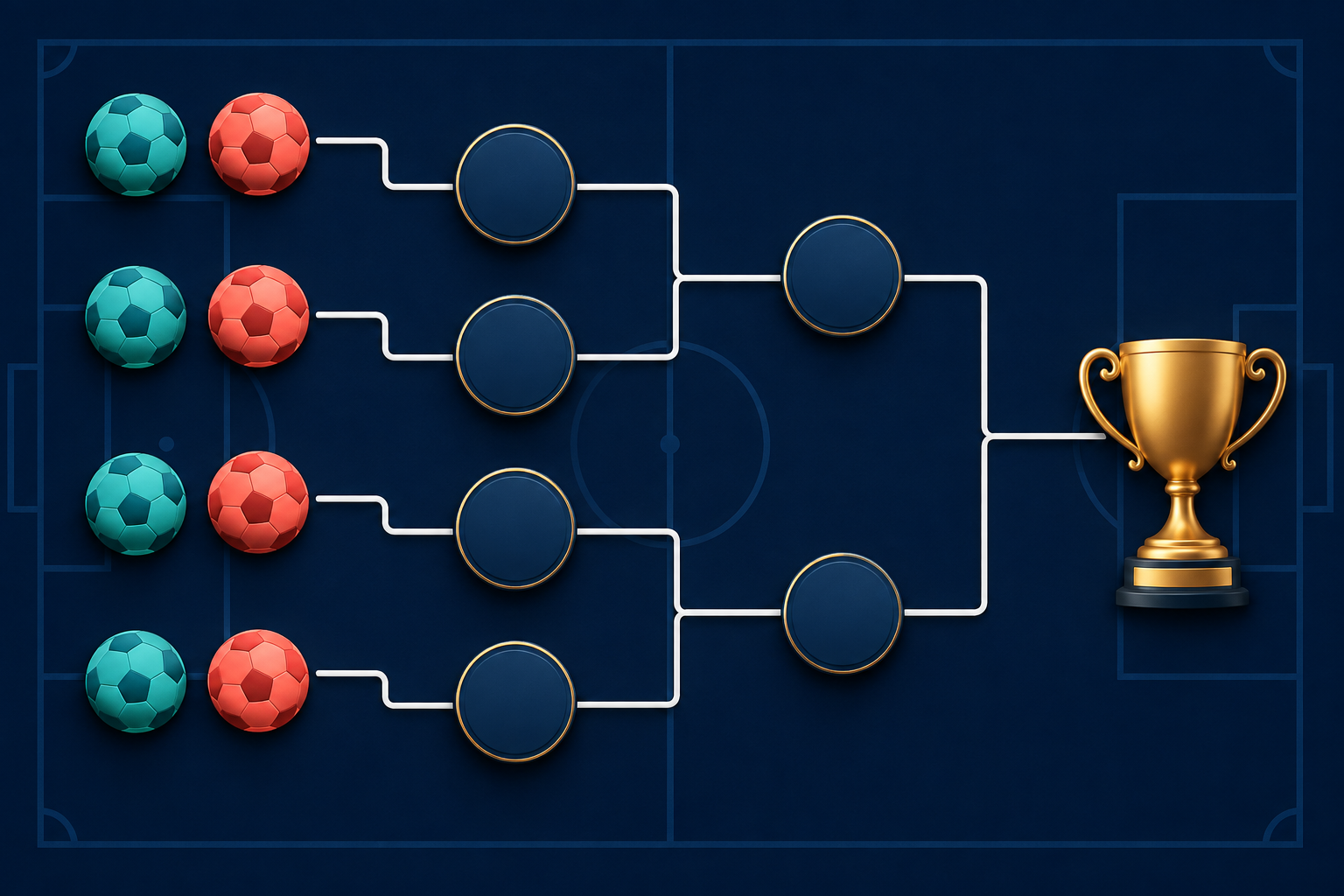
The current NWSL rules give each club a 30-match regular season and send the top eight into a single-elimination playoff. There is no first-round bye, so finishing first changes the opponent and hosting position rather than removing a round. The bracket is fixed from the quarterfinals onward.
Bracket and home field
Top half
Seed 1 plays 8 and seed 4 plays 5. Those winners meet in a semifinal.
Other half
Seed 2 plays 7 and seed 3 plays 6. Those winners meet in the other semifinal.
The higher seed normally hosts a quarterfinal or semifinal, but the rule explicitly makes that benefit subject to venue availability. A provisional fourth place is therefore valuable without being a promise of a particular stadium. The existing 2026 playoff schedule guide follows the round windows, while the complete schedule will show confirmed match details.
A tied playoff game continues through two complete 15-minute extra-time periods. If the score remains level, penalties determine who advances. That is different from the regular-season point system, where a draw remains a draw.
Tiebreaker order
When clubs finish level on regular-season points, the NWSL does not jump directly to head-to-head. The current sequence is:
- Goal difference.
- Total wins.
- Goals scored.
- Head-to-head points.
- Head-to-head goals scored.
- Fewest disciplinary points.
- Coin flip for two clubs, or drawing of lots for three or more.
That order matters in a compressed table. Goal difference explains today's provisional order among the three clubs on 39 points, but it can change with every final. Use the standings rather than applying head-to-head first.
The top-six race and home-field leverage
The upper table is not only a contest for first place. Seeds one through four normally host a quarterfinal, while seeds five through eight normally travel, subject to venue availability. With places two through seven packed into a six-point band, one strong or poor week can change both the opening opponent and the expected location.
Current band: Washington has 43 points in second; North Carolina, Utah and San Diego have 39; Portland has 38; Kansas City has 37. The current fourth-to-seventh gap is only two points.
Those margins create leverage without guaranteeing anything. A club can move from a hosting place to a traveling seed after one final, and goal difference becomes relevant only if the point totals are tied. The league's current standings are the authority for order; the site's power rankings discuss form but do not award seeds.
Gotham leads, but has not clinched
Gotham sits first with 45 points from 23 games, two ahead of Washington. That is a meaningful advantage, but it is not enough for this guide to declare an official clinch. Angel City, currently ninth, has 32 points from 22 matches and can still reach a simple theoretical maximum of 56 by winning all eight remaining games.
The comparison is deliberately conservative. It proves only that a quick “leader versus ninth place” ceiling test does not close the door. A complete clinch proof must account for every relevant pursuer, remaining head-to-head match, mutually exclusive result and potential tiebreak. Until the league confirms qualification or that full proof is completed, “provisional leader” is the accurate label.
Three teams on 39
North Carolina
39 points, +13 goal difference
Utah
39 points, +10 goal difference
San Diego
39 points, +6 goal difference
Goal difference explains their present third-through-fifth order because it is the first tiebreaker. It is not a permanent cushion: every goal scored or conceded in the remaining schedule can alter it. Fans should track both results and margin rather than assuming equal-point clubs will stay in today's sequence.
Bubble teams around eighth
Seattle owns the final provisional playoff place with 34 points, but Angel City sits only two points behind and has played the same number of games. Denver is four points below the line, while Orlando and Houston face larger gaps with one fewer match remaining. Those differences make “bubble team” a useful description, not an official competition status.
| Place | Club | GP | Pts | Gap to 8th |
|---|---|---|---|---|
| 8 | Seattle Reign FC | 22 | 34 | — |
| 9 | Angel City FC | 22 | 32 | 2 |
| 10 | Denver Summit FC | 22 | 30 | 4 |
| 11 | Orlando Pride | 23 | 29 | 5 |
| 12 | Houston Dash | 23 | 26 | 8 |
Seattle and Angel City at the line
Both clubs have completed 22 matches, so the comparison does not require a games-in-hand adjustment. A Seattle loss combined with an Angel City win would reverse their point totals in one round. Other combinations may narrow, preserve or expand the gap, and goal difference matters only if their points are level.
That is why the next final is more useful than a broad probability claim. Open the current weekly schedule for upcoming opportunities and then return to the official table after the results are recorded.
Denver, Orlando and Houston
Denver's eight remaining matches provide one more opportunity than Orlando or Houston have, but none of those points is guaranteed. Orlando begins one point behind Denver despite having played an extra game. Houston starts eight behind Seattle and therefore needs both its own results and favorable movement elsewhere.
Do not label elimination from rank alone. Remaining points, matches between contenders and tiebreak possibilities all matter. Until an official announcement or exhaustive proof closes every route, “outside the line” is more accurate than “eliminated.”
Clinching and elimination math
A useful playoff calculation begins with a ceiling, not a guess. Every club plays 30 regular-season matches, and a win is worth three points. Subtract games played from 30, multiply the remainder by three, and add that number to the club's current total. The result is its theoretical maximum if it wins every remaining match.
Maximum-points formula
Current points + 3 × (30 − games played) = theoretical ceiling.
The word theoretical is essential. The formula assumes a perfect finish and ignores that contenders may play one another. It is a fast way to reject an impossible claim or identify a team whose path is narrowing, but it does not independently establish a clinch, elimination or likely finish.
Maximum-points test
| Club | Current | Remaining | Maximum |
|---|---|---|---|
| Seattle Reign | 34 | 8 | 58 |
| Angel City | 32 | 8 | 56 |
| Houston Dash | 26 | 7 | 47 |
| Chicago Stars | 16 | 7 | 37 |
These examples show different uses of the test. Seattle and Angel City still have ceilings well above today's line. Houston can still exceed Seattle's current 34, so the present gap is not mathematical elimination. Chicago's ceiling of 37 is below several current top-seven totals, but proving whether eighth remains reachable still requires the other teams' schedules and possible shared results.
Why official confirmation is harder
Multi-team races are constrained. Two clubs facing each other cannot both earn three points from that match. A draw distributes one point to each; a win distributes three to one and zero to the other. Those dependencies may clinch or eliminate a club earlier than separate maximum totals suggest.
Equal-point endings add another layer. Goal difference, wins, goals scored, head-to-head measures and discipline may need to be projected across several clubs. The safest public label remains “not officially clinched” or “not officially eliminated” until the league confirms it or every combination has been checked against the remaining schedule and current standings.
How to update the race after every result
A playoff picture becomes stale as soon as another result is final. The safest update method begins with the match status, not a score notification. A scheduled match has not begun, a live match can still change, and a delayed or postponed match has not produced a completed outcome. Only a confirmed final should be used to add standings points.
Scheduled
No result exists; add no points.
Live
Score and outcome can still change.
Delayed
Wait for resumption or a later ruling.
Postponed
Do not bank a projected score or points.
Final
Apply the confirmed outcome to the table.
- Confirm status. Open the games-today page or complete schedule and verify that the result is final.
- Apply points. Add three to the winner and zero to the loser, or one to each club for a draw.
- Increase games played. Update both participating clubs by one completed match.
- Reorder the table. Sort by points, then use the official tiebreak sequence only where totals are level.
- Recalculate ceilings. Reduce each participating club's remaining-game count and recompute its maximum.
Consider a hypothetical Seattle–Angel City match starting from this snapshot. If Angel City won, it would move from 32 to 35 points while Seattle stayed on 34, and both would move from 22 to 23 games played. Angel City would provisionally cross the line. If the match were still live at that score, none of those changes would belong in the table yet.
A draw in that example would put Seattle on 35 and Angel City on 33, preserving Seattle's advantage. A postponement would leave the snapshot unchanged until the match is completed or the league records an official outcome. This discipline prevents two common errors: treating an in-progress lead as points and treating a game in hand as a win.
Coverage is separate from status. The TV schedule helps viewers find a match, but a channel listing does not make its outcome final. Recheck the match state and then refresh the standings.
Playoff picture FAQ
These answers combine the current June 24 competition rules with the league's official 2026 schedule announcements. The format and published round dates are current; every seed named earlier remains a September 7 snapshot after results through September 6.
How many teams make the 2026 NWSL playoffs?
Eight of the league's 16 clubs qualify. All eight enter the opening single-elimination round, so finishing first does not create a bye.
When does the opening round begin?
The official schedule announcement places the quarterfinal opening round across November 6–8, 2026. Individual teams and matchups depend on the final standings.
What is the first-round bracket?
Seed 1 plays 8, seed 2 plays 7, seed 3 plays 6 and seed 4 plays 5. The bracket then keeps the 1/8 and 4/5 winners on one semifinal path and the 2/7 and 3/6 winners on the other.
Does the higher seed always host?
The higher seed normally hosts quarterfinal and semifinal matches, but the rules make that benefit subject to venue availability. Treat the seed as hosting priority, not a guarantee of a specific building.
Does eighth place host a quarterfinal?
Not under the normal 1-versus-8 arrangement. The top seed has hosting priority, subject to the same venue-availability clause. That makes eighth a qualification place without the normal home-field benefit.
What happens if a playoff match is tied?
The teams play two complete 15-minute extra-time periods. If they remain level, a penalty shootout decides who advances. That procedure applies to knockout matches, not an ordinary regular-season draw.
When and where is the Championship?
The 2026 NWSL Championship is scheduled for Saturday, November 21 at Audi Field in Washington, D.C. Kickoff is listed for 8 p.m. ET, with coverage on CBS and Paramount+.
Can the current top eight still change?
Yes. The September 7 table is provisional, clubs have unequal numbers of games remaining, and the bubble gaps are still reachable. Reopen the table after each confirmed final.
For round-by-round planning, use the complete playoff schedule guide. Use the TV schedule for current coverage and the standings for seed movement. A published round window is not the same thing as a finalized matchup or kickoff time.
Fans can safely reserve the November 6–8 weekend as the announced opening-round window, but should wait before attaching a club, opponent or venue to a particular day. Final seeding determines the bracket positions, and the venue-availability clause can matter even after the higher seed is known. The November 21 Championship information is firmer at the event level—Audi Field, 8 p.m. ET, CBS and Paramount+—yet the two participating clubs will not be established until the knockout rounds are played. Keeping “announced event detail” separate from “future matchup” avoids turning a planning guide into a prediction.
The same distinction applies to home-field conversations in September. A club currently inside the top four has valuable provisional position, not a locked home match. A club below eighth still has work to do, not an automatic elimination label. Follow finals, recalculate the table, and let the official bracket confirm the actual assignments.
Snapshot discipline: quote the date whenever you share this race. A team can move after one final, and a delayed or postponed match must remain uncounted until the result is official. Format rules change only through an official update; seeds change through completed matches.
Loading comments…